
Bedrock Data, the platform provider for data security and AI governance, today announced AI-assisted remediation, which federates the work of fixing data exposure to the data owners across the enterprise. Bedrock Data discovers who owns each exposed dataset, opens a ticket for that owner in the Jira or ServiceNow workflow the enterprise already runs and supplies the context needed to fix it. When the owner closes the ticket, Bedrock Data validates that the exposure is remediated and reopens the ticket if it is not. Remediation now keeps pace with the rate of data creation instead of accumulating in a centralized security team’s backlog. The capability is generally available today and included with the Bedrock Data platform.
This press release features multimedia. View the full release here: https://www.businesswire.com/news/home/20261029262424/en/
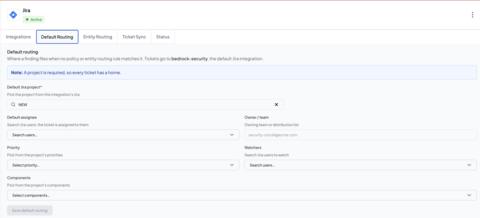
With Bedrock Data, security teams configure Jira ticket routing by setting flexible rules that intelligently route tickets to their correct owners, leveraging context from the data and assets affected.
Enterprise data is measured in petabytes, billions of records, millions of documents and thousands of data stores. A centralized security team accountable for that data is small by comparison and cannot fix exposure at that scale on its own. It does not have access to most of the data and does not know how the business uses it. The data owners in engineering, data and business teams do. Conventional DSPM tools stop at visibility, which leaves security teams with a growing list of exposures and no reliable way to get them fixed. In Bedrock Data’s Enterprise Data Security Confidence Index, 76% of respondents said a lack of automation and too much manual work hold back data security.
AI adoption raises the chance that an unresolved exposure turns into a leak. AI agents and copilots access data on their own, at machine speed, and they follow permissions rather than business intent. Sensitive data left in a test environment or a document shared too broadly was previously unlikely to be discovered. An AI system can now find it and surface it in an answer. In EY’s 2026 AI Risk and Governance Survey, 85% of executives at companies using AI agents said some of those agents take important actions without real-time human involvement. Reducing data exposure lowers the risk of leaks, misuse and compliance violations, and it enables the enterprise to scale up AI adoption.
“Every enterprise has far more data issues than its centralized data security team can action. Until now, with data growing exponentially, risk accumulation and risk remediation were divergent curves. Data is the responsibility of the lines of business and the data organization, and remediation only scales when they own the fix,” said Bruno Kurtic, CEO and co-founder of Bedrock Data. “Bedrock Data finds the owner, sends the issue to the tools they already use, answers their questions inside the ticket and verifies the result. Security teams keep control of the rules and the audit trail, and those curves no longer diverge because remediation now operates at scale.”
Federated Remediation Runs Through Existing ITSM Systems Enterprises Already Use
Enterprises already track and resolve issues in Jira and ServiceNow, and their teams know those systems. Bedrock Data orchestrates those same systems, federating remediation to data owners at enterprise scale. There is no new tool to deploy and no new training for the people who make the fixes. Security teams can extend or override the default routing with rules written in natural language, for example “send findings on this AWS account to the cloud platform team, unless the finding involves access permissions, then route it to the identity and access team.” Routing runs continuously as scans find new exposures, so remediation is an ongoing program rather than a one-time cleanup. The data owner makes the fix. Bedrock Data automates the workflow and verifies that each remediation has been applied.
Bedrock Data handles three steps in the remediation workflow:
- Bedrock Data findings create tickets and route them to owners. Bedrock Data AI examines each exposure and explains it in context, so the owner understands the problem without a manual investigation. Tickets use the format the customer configures, including custom fields.
- Bedrock Data AI answers questions inside the ticket while it is open, for example, “Who has access to this file?”
- Bedrock Data policy engine tracks the ticket to closure. When the owner marks the ticket resolved, Bedrock Data validates the fix. If the exposure is gone, the ticket stays closed. If the exposure remains, Bedrock Data reopens the ticket with the reason. If Bedrock Data finds on its own that the exposure has been fixed or is no longer observed, it closes the ticket.
Where the fix is well defined, Bedrock Data can apply it directly. Customers can create a policy that revokes sharing on documents based on sensitivity and other criteria, without triggering a workflow, and notifies the data owner that the change was made. Data owners will be able to opt in to automatic remediation for exposure types that recur often and where they are comfortable automating the response.
“Data risk is my team’s responsibility, but lasting fixes have to come from the teams who run the systems every day,” said Manish Chandela, EVP Information Security, Risk and Privacy at Sportradar. “Seeing the risk is table stakes. Reducing it means getting thousands of issues fixed without breaking the business. Bedrock Data puts each issue in front of the right owner, with the context to fix it, inside the tools they already use, and then proves the fix held. Remediation stops being a backlog my security team carries and becomes a program the whole company runs, with the evidence our board and auditors expect.”
Verified Fixes Produce the Audit Trail PCI DSS 4.0.1, SOC 2 and NYDFS Part 500 Auditors Expect
Closing the loop changes what security leaders can show their board and auditors. Every exposure has an owner, a timeline and evidence that the fix held. Auditors working under PCI DSS 4.0.1 and SOC 2, and regulators enforcing NYDFS Part 500, expect that audit trail. Bedrock Data produces it for every ticket it opens. IBM’s 2026 Cost of a Data Breach Report found that organizations making extensive use of AI and automation in security operations had average breach costs $1.93 million lower and lifecycles 65 days shorter than organizations that didn’t use them.
Availability
AI-assisted remediation is available today to Bedrock Data customers for Jira and ServiceNow and is included with the Bedrock Data platform. Customers connect their Jira or ServiceNow instance to get started.
Additional Resources
- Request a Bedrock Data platform demo
- Follow Bedrock Data on LinkedIn, X and Bluesky
About Bedrock Data
Bedrock Data is a data security and AI governance platform built on an enterprise knowledge graph of the company’s data: what it is, where it lives, where it came from, who can access it and how it is used. Bedrock Data builds and maintains that graph, its patented Metadata Lake, by discovering and classifying data in place across cloud, SaaS, AI and on-premises environments at petabyte scale, without moving data outside customer boundaries. Its open, API-first design delivers those facts to the tools already in the enterprise stack and makes them the basis for policy enforcement, AI governance and remediation workflows. Security, data, infrastructure and AI leaders in technology, finance, healthcare and biotech rely on Bedrock Data to secure their data and accelerate AI without increasing risk. Learn more at bedrockdata.ai.
View source version on businesswire.com: https://www.businesswire.com/news/home/20261029262424/en/
Media gallery



