As AI drives up power demand in Georgia, businesses with a clear technology strategy—not just more tools—will come out ahead.
ATLANTA, GA, UNITED STATES, June 25, 2026 /EINPresswire.com/ — Georgia is in the middle of one of the largest electrical infrastructure buildouts in its history, driven almost entirely by demand for artificial intelligence data centers. Georgia Power’s own 2025 Integrated Resource Plan projects approximately 8,500 megawatts of new electrical load growth over six years — more than triple what the utility was forecasting just three years earlier. Some individual data center facilities under development require as much power as a small city.
For Atlanta-area businesses watching this unfold, the headlines raise an obvious question: what does an AI-driven construction and energy boom in their backyard actually mean for their own technology costs and decisions?
According to Eclipse Networks, an Atlanta-based managed IT and cybersecurity provider founded in 1989, the answer has less to do with the price of electricity and more to do with the absence of strategy inside the businesses trying to keep up.
“Every business owner is hearing about AI right now, and a lot of them feel pressure to do something with it immediately,” said Steve Ryerse, co-founder of Eclipse Networks. “The problem is, most of that pressure isn’t coming with a plan attached. Businesses are buying tools, signing up for platforms, and making infrastructure decisions in isolation, without understanding how those pieces are supposed to work together. That’s how budgets spiral. It’s not the technology itself that gets expensive — it’s the lack of a strategy behind it.”
The scale of Georgia’s data center growth has drawn scrutiny from regulators, lawmakers, and local governments. The Georgia Public Service Commission has held extensive hearings on how to allocate the cost of new power generation, and in 2026 approved rule changes specifically designed to ensure data centers — not residential and small commercial customers — bear the cost of the infrastructure built to serve them. Georgia Power has also frozen base rates through 2028 and agreed to financially backstop new energy production costs through 2031 if anticipated data center contracts don’t materialize as projected.
That protection has limits, and the long-term picture remains unsettled: several Georgia counties and cities have already passed moratoriums or new zoning rules in response to data center proposals, and state lawmakers are actively debating additional ratepayer protections. For businesses, the larger lesson isn’t a specific dollar figure on a future bill. It’s that the technology landscape around them is shifting quickly, with real consequences for infrastructure planning, vendor selection, and long-term costs.
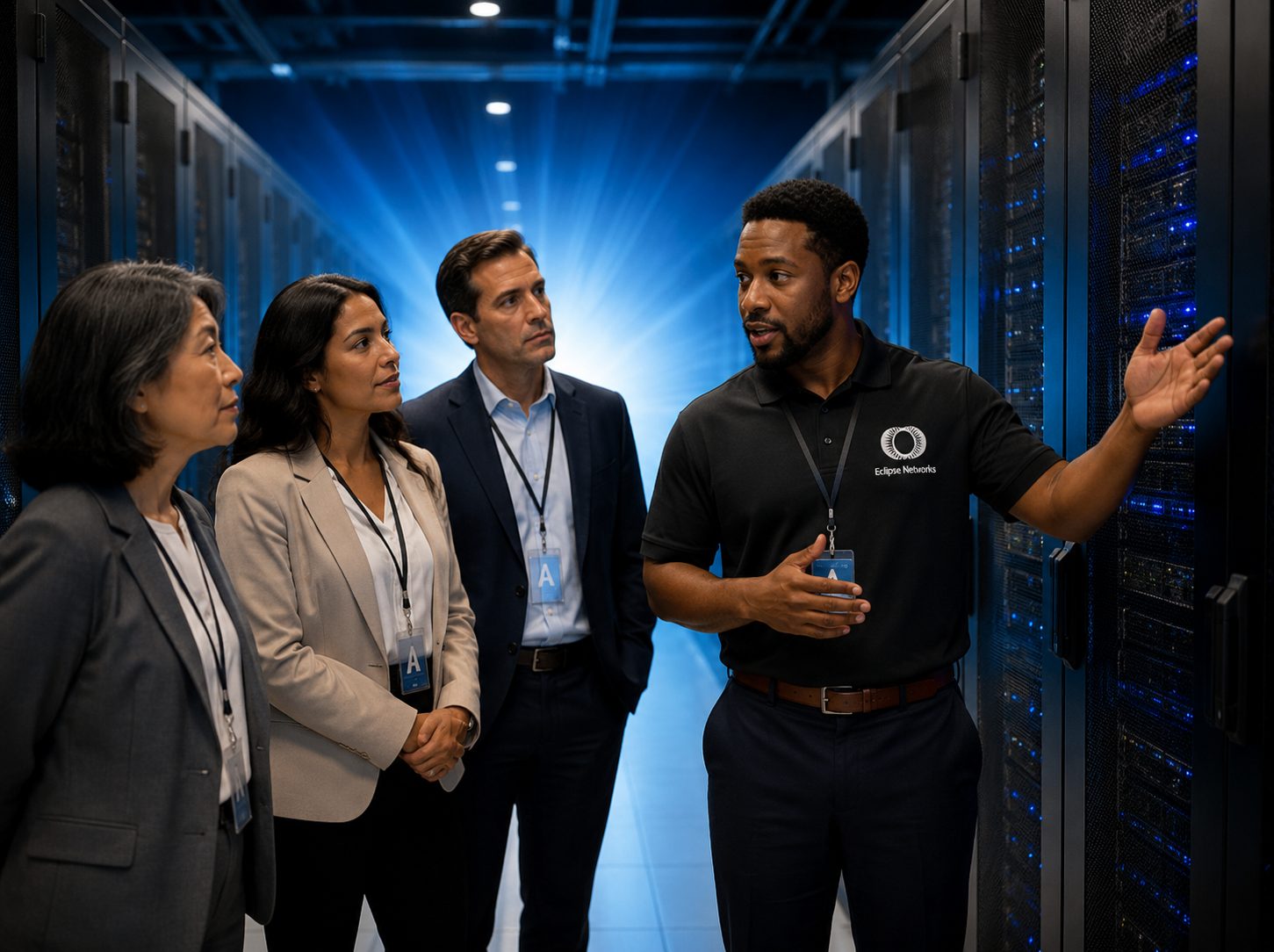
Eclipse Networks points to its own infrastructure as an example of a different approach. Rather than operating out of a hyperscale facility or leasing space from a national cloud provider, Eclipse built and has operated its own private cloud data center in the Atlanta area since 2011 — a roughly 1,000-square-foot facility that supports more than 3,500 endpoints without relying on water-based cooling systems.
“There is a right way and a wrong way to build data centers and deploy AI, and right now we’re watching a lot of businesses run headfirst into decisions without a strategy in place,” Ryerse said. “Our entire power footprint is built for efficiency, not scale for its own sake. That keeps our environmental and electrical impact on the surrounding area minimal, and it’s part of why we can keep costs predictable for the businesses we work with, instead of passing along the volatility everyone else is dealing with right now.”
Eclipse Networks recommends that SMB leaders treat the current moment as a planning opportunity rather than a reason to react. That means auditing existing infrastructure before adding new AI tools, understanding how new platforms will integrate with — or duplicate — what’s already in place, and working with a technology partner who can map costs and capabilities to actual business goals rather than industry hype.
“The businesses that will come out ahead of this aren’t the ones that moved first. They’re the ones that moved with a plan,” Ryerse said. “That’s the role we play — we help our partners understand how their systems fit together so they’re not making expensive decisions in the dark.”
Eclipse Networks works with small and mid-sized businesses across healthcare, construction, legal, and professional services throughout the Atlanta metro area, providing managed IT, cybersecurity, cloud, and infrastructure strategy services.
Eclipse Networks is offering a free AI Readiness Consultation to Georgia businesses through the end of September. During the consultation, the Eclipse team will assess each organization’s current technology environment, identify where AI can realistically improve operations, and uncover the gaps or risks that could turn a promising initiative into a costly mistake.
Georgia businesses can schedule a free AI Readiness Consultation through the end of September. Availability is limited.
Aly Lee
Eclipse Networks
+1 770-399-9099
Communications@eclipse-networks.com
Visit us on social media:
LinkedIn
Instagram
Facebook
Legal Disclaimer:
EIN Presswire provides this news content “as is” without warranty of any kind. We do not accept any responsibility or liability
for the accuracy, content, images, videos, licenses, completeness, legality, or reliability of the information contained in this
article. If you have any complaints or copyright issues related to this article, kindly contact the author above.

Media gallery