
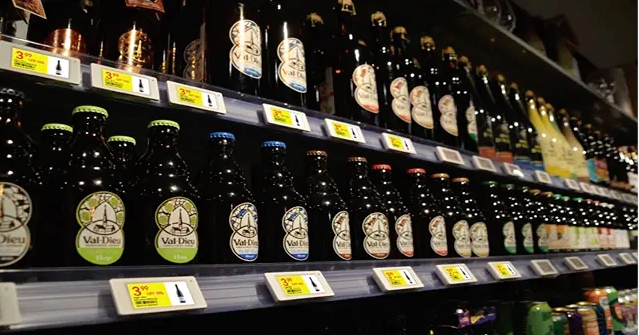
Guangzhou, China – September 14, 2026 – Moving Beyond Manual Price Changes: For retailers, a price label is a small component with an outsized operational impact. When shelf prices are changed manually, every update requires printing, sorting, distributing, and replacing paper labels. The process becomes harder to control as product counts grow, promotions change more frequently, or a business expands across multiple stores. A mismatch between a shelf label and a central system can also create avoidable friction for employees and shoppers.
This is why buyers evaluating an ESL solution need to look beyond the screen attached to the shelf. The real question is whether the complete system can connect product data, communications infrastructure, display hardware, software, and day-to-day store workflows in a manageable way.
ZhSunyco® approaches this requirement as an electronic shelf label and retail IoT manufacturer. Established in 2016, the company describes its capabilities as spanning hardware and product design, software development, solution implementation, and after-sales service. Its portfolio is intended for applications ranging from supermarkets and convenience stores to warehouses, smart offices, healthcare settings, and selected industrial environments. This broader system perspective gives buyers a practical starting point for matching technology to the scale and operating conditions of each project.
Matching Communication Technology to the Use Case
No single wireless architecture is the right fit for every site. Store size, update frequency, data volume, existing infrastructure, and the way employees interact with labels can all influence the choice. ZhSunyco offers several electronic shelf label options, including 2.4 GHz, 433 MHz, BLE, NFC, Wi-Fi, and industrial ESL products. It also supplies e-paper displays, LCD displays, base stations, software, and mounting accessories.
For large and medium retail environments, the company’s 2.4 GHz system is designed to work with centralized communication and can connect with POS, ERP, CRM, and MCR environments. The product page describes cloud and local-area-network deployment options, while MQTT, API, and SDK support can help system integrators connect ESL functions with existing business software. Buyers should confirm the required interface, data format, security requirements, and deployment architecture during technical evaluation.
Smaller or more distributed use cases may call for a different approach. NFC labels, for example, can be updated at close range through a compatible mobile device, making them relevant where a full base-station network is unnecessary. By reviewing the available ESL solution options as a system rather than selecting a label by appearance alone, project teams can align communication method, software, and operating workflow from the beginning.
Adapting the System to Different Store Environments
Physical retail spaces rarely follow one standard layout. Shelf profiles, freezer areas, counters, display tables, storage zones, and promotional fixtures can require different screen sizes and mounting methods. Branding and information requirements also vary by market. A grocery label may prioritize price, unit price, and promotion details, while an electronics store may need more product specifications on screen.
ZhSunyco’s 2.4 GHz range includes multiple e-paper formats and several pixel-color configurations. The published product information also lists customizable housing colors for applicable models. On the software side, the company states that label templates and user interfaces can be adapted to customer requirements. These options allow a project team to organize information around local language, brand identity, employee workflows, and the data available from the customer’s system.
Accessories are another important part of customization. ZhSunyco lists rails, adapters, hanging clips, horizontal clips, rotating clips, tabletop stands, and removal tools among its accessory options. Choosing these components during the planning stage helps reduce improvised installation work later. Buyers should provide shelf drawings, photos, environmental conditions, preferred label sizes, expected update frequency, and required data fields so that the proposed configuration can be checked against the actual site.
Connecting Hardware, Software, and Store Data
Reliable deployment depends on more than producing labels. Product information must move from a source system through the management software and communications network to the correct display. If responsibilities at each point are unclear, even capable hardware may be difficult to operate at scale.
ZhSunyco’s published workflow begins with confirming the customer’s data type, followed by software deployment, template design, and connection of electronic displays to the management system. Its eRetail software can be deployed through cloud or local-network architectures. The company also lists compatibility with Windows, Linux, macOS, .NET 6.0, and Docker for applicable software deployments, together with mobile-client support for specified Android and iOS versions.
These choices give retailers and integrators room to decide where data will be hosted and how updates will be managed. A cloud-based architecture can support coordinated changes across multiple locations, while a local network may suit projects that keep core systems on site. API and SDK resources are particularly relevant to POS providers and system integrators that need to place ESL management inside a wider retail technology stack.
Before implementation, buyers should document product-data ownership, update triggers, user permissions, network coverage, exception handling, and recovery procedures. A pilot in a representative store or zone can then test the complete data path rather than validating the display in isolation.
Building Quality Checks into Supplier Evaluation
An electronic shelf label is expected to remain readable and responsive throughout repeated operational use. Buyers therefore need evidence related to display performance, communications, battery configuration, operating environment, assembly, and inspection—not only a sample that looks good during a demonstration.
ZhSunyco’s company profile states that its production facilities are managed by more than 25 professionals and that its quality team includes 10 auditors with more than five years of industry experience. The same page reports utility-model and invention patent holdings and lists CE, ISO 9001, and RoHS among its certifications. Because certification coverage can differ by company entity, product model, and market, procurement teams should match each document to the exact configuration being ordered.
Published specifications for the 2.4 GHz range vary by label size and include display resolution, pixel colors, communication distance, battery type, replaceability, and operating temperature and humidity. These model-level differences matter. A buyer should confirm the specification sheet for the selected label, request applicable test or inspection records, and define acceptance criteria before volume production. This turns quality from a general promise into a set of checks that both parties can understand.
Planning Deployment and Ongoing Support
International ESL projects involve several coordinated tasks: site assessment, integration, label and accessory selection, production, packaging, shipment, installation, testing, training, and post-deployment support. The sequence becomes especially important for multi-store rollouts, where a small issue in template logic or mounting choice can be repeated across thousands of shelf positions.
ZhSunyco presents its service coverage as extending from product and software development through implementation and after-sales support. Its Spanish-language website also provides product downloads, manuals, case studies, and direct access to a specialist. This combination can help customers and integration partners collect technical information before finalizing a configuration.
Project-specific terms still need to be agreed in writing. Buyers should confirm the delivery schedule for standard and customized items, the division of installation responsibilities, software deployment requirements, remote-support arrangements, spare-unit planning, training materials, and warranty scope. It is also useful to identify who will handle store data preparation and first-line troubleshooting after launch.
A staged rollout can make these responsibilities easier to validate. After a pilot confirms communication coverage, data mapping, template readability, and employee procedures, the project team can document the approved setup and use it as the baseline for additional locations.
Choosing a Partner for Long-Term Retail Digitization
The most useful ESL solution is not simply the label with the longest feature list. It is a coordinated system that fits the buyer’s infrastructure, update process, store environment, and support model. Communication choices, integration resources, customizable displays and accessories, documented quality controls, and a clear deployment plan all contribute to a more predictable project.
ZhSunyco brings these elements together through a portfolio that covers ESL hardware, e-paper and LCD displays, base stations, management software, integration resources, and accessories. The company states that it has served customers in more than 180 countries, giving it experience with varied market and application requirements. Buyers can use the company’s product information as a starting point, then verify model specifications, certification scope, software compatibility, service terms, and rollout responsibilities against their own project brief.
Organizations planning a new deployment or replacing a manual labeling process can contact ZhSunyco with store dimensions, system interfaces, preferred display formats, expected update frequency, and installation conditions. A detailed brief will help the supplier recommend an appropriate configuration and prepare a more relevant project proposal.
Company Name: ZhSunyco®
Email: info@zhsunyco.com
Phone: +86 186 6610 2358
Website: https://www.zhsunyco.com/es/
About The Company
Established in 2016, ZhSunyco® is an electronic shelf label (ESL) and retail IoT manufacturer specializing in smart display solutions for retail, warehousing, healthcare, and smart office environments. The company provides end-to-end capabilities spanning hardware design, software development, solution deployment, and after-sales service, delivering advanced ESL hardware, e-paper displays, LCD screens, and cloud management software. Committed to helping global clients achieve seamless operational efficiency, ZhSunyco® serves customers across more than 180 countries with reliable connected technology.
Media Contact
Company Name: ZhSunyco
Contact Person: Media Relations
Email: Send Email
Phone: +86 186 6610 2358
Address:Pointing Technology Park, Hongqi, Jinwan
City: Zhuhai
State: 519000, Guangdong
Country: China
Website: zhsunyco.com
Press Release Distributed by ABNewswire.com
To view the original version on ABNewswire visit: What Sets a Practical Electronic Shelf Label (ESL) Solution Apart?


