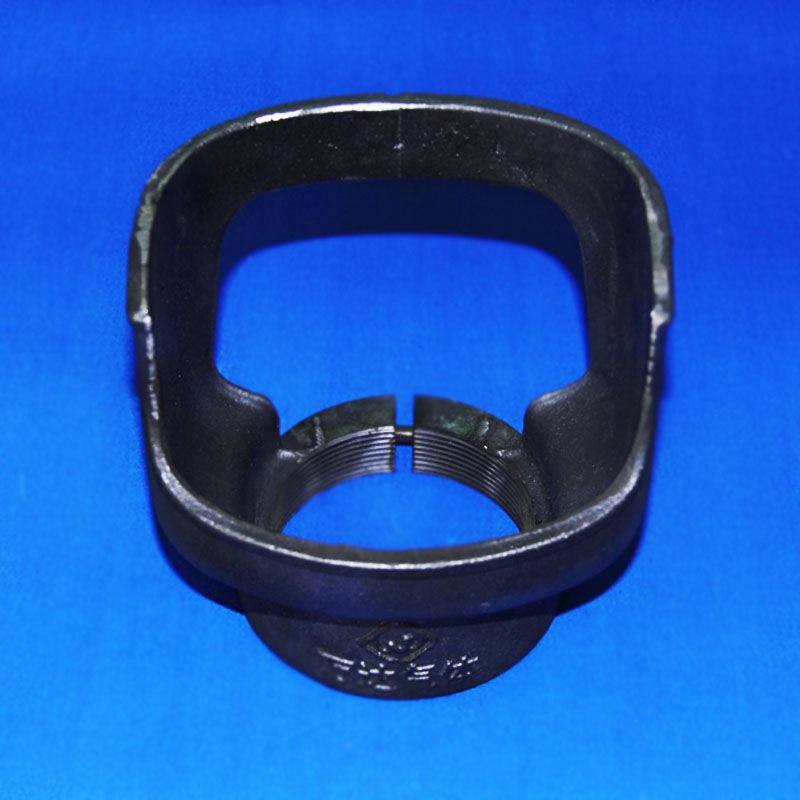
HANGZHOU, ZHEJIANG, CHINA, October 9, 2026 /EINPresswire.com/ — Open safety guards outperform full-cover caps whenever operations demand rapid manifold hookups, high-volume automated filling, or frequent jobsite cylinder movement. Sourcing an Industrial Cylinder Safety Guard for Valve Protection allows gas distributors to eliminate lost cap expenses while safeguarding valve stems against glancing impacts. Qizheng engineers heavy-duty steel guards designed for high-turnover industrial gas fleets worldwide, manufactured to certified drop and lifting standards.
Industrial gas packaging and distribution facilities face continuous pressure to improve operational throughput while maintaining stringent safety protocols. For decades, traditional removable threaded caps served as the default valve protection method across global cylinder fleets. However, in modern high-velocity distribution loops—where cylinders are filled, dispatched, connected to manifolds, and returned on tight daily schedules—the repetitive labor of unscrewing and refitting caps creates severe bottlenecks. Identifying the operational scenarios where open-access safety guards outperform enclosed caps enables fleet managers to make data-driven hardware investments.
High-Turnover Filling Plants and Daily Manifold Connections
High-volume cylinder filling plants handle hundreds of gas cylinders each shift. In traditional operations, operators must manually unscrew protective caps from every cylinder before attaching filling whips, repeating the process after disconnection. This repetitive handling consumes significant labor hours and slows automated filling carousels. Because manual cap detachment requires twenty to thirty seconds per vessel, cumulative delays across thousands of daily cylinder fills create substantial throughput losses.
Open-access safety guards remain permanently installed during filling and dispensing cycles. Technicians connect pigtails, regulators, and transfer hoses directly through generous side window apertures. By eliminating cap removal cycles, open guards accelerate filling depot turnaround times and reduce worker wrist strain. Sourcing teams deploy open guards across regional distribution routes to maximize facility throughput, allowing operators to focus on gas analysis, leak detection, and manifold balancing rather than unscrewing threaded hardware.
Furthermore, permanent guards streamline automated packaging lines. Modern robotic or palletized filling carousels operate with high synchronization. Unobstructed lateral access to valve ports allows automated filling clamps to engage instantly without human intervention. By removing the mechanical step of physical cap detachment, automated filling facilities achieve continuous operating rhythms and higher shift productivity.
Eliminating Missing Caps and Secondary Yard Replacement Costs
Displaced and missing cylinder caps represent a persistent operational drain for industrial gas distributors. When end users remove threaded caps on jobsites to connect regulators, closures are frequently misplaced, damaged, or discarded. Returned empty cylinders arrive at depots without valve protection, exposing neck threads to abrasive grit and moisture. In large distribution networks, annual cap loss rates reach 10% to 20% of the circulating fleet, generating substantial recurring replacement procurement costs.
Deploying permanently mounted or fixed valve guards eliminates cap shrinkage across customer networks. Because the guard stays anchored to the cylinder neck collar throughout its service lifecycle, valve stems remain protected during storage, return transit, and sorting. Distributors save considerable annual expenditure on replacement caps while preserving asset integrity.
Beyond direct purchasing savings, permanent guards eliminate the labor associated with inventory replenishment. Depot personnel no longer waste valuable shift hours searching for matching threaded caps, re-threading stripped collars, or sorting mismatched closures. When a returned cylinder enters the loading dock, its permanent guard is already in place, verified, and ready for immediate washing, refilling, and dispatch.
Operational Scenario Matrix: Guard Fitment vs Full Cap Protection
Evaluating operational criteria helps fleet managers identify which distribution loops benefit most from guard retrofitting. Fleet directors evaluate five common deployment environments when selecting protective hardware:
High-Speed Filling Carousels: Open-access steel guards allow direct whip attachment without unscrewing caps, reducing changeover labor by up to 40% in automated gas depots.
Hospital and Laboratory Gas: Removable enclosed caps provide complete physical isolation against dust, airborne microbes, and particulate matter, maintaining strict medical purity standards.
Local Jobsite Delivery Routes: Permanently mounted valve guards prevent cap loss on contractor work sites, eliminating replacement purchasing costs across customer fleets.
Long-Haul Hazardous Material Freight: Full-cover steel caps meet mandatory DOT and ADR transport rules, guaranteeing transit compliance during intermodal container shipping.
Welding Fabrication Manifolds: Cage-style safety guards provide instant regulator access and rapid visual inspection, minimizing daily equipment hookup downtime for commercial end users.
Aligning fleet retrofitting programs with this operational matrix ensures that capital investments deliver immediate payback while preserving regulatory compliance across sensitive gas categories.
Ergonomic Handling and Certified Cylinder Lifting Requirements
Manual cylinder movement across warehouse floors and loading docks requires robust physical leverage. Operators frequently attempt to roll cylinders by gripping unrated protective caps, exerting dangerous shear stresses on collar threads. In contrast, certified valve guards incorporate ergonomic grip contours that assist safe manual rolling and positioning. Rounded outer crown profiles and smooth lateral ribs provide secure handholds, reducing slip-and-fall incidents in wet or oily plant environments.
Certain heavy-duty cast steel guards are certified to international lifting standards such as ISO 11117. When properly rated and tested, these guards permit safe mechanical lifting using crane hoists, rigging slings, and spreader beams. Lifting-rated cylinder guards require explicit manufacturer certification and documented working load limits before crane handling. Utilizing certified lifting guards eliminates the need for specialized cylinder lifting cages or slings, accelerating loading cycles onto offshore support vessels and construction staging platforms.
Fleet Transition and Retrofitting Evaluation Workflow
Fleet managers evaluating a transition from removable caps to open guards should execute four verification steps:
Audit cylinder collar neck rings across the target fleet to identify thread profiles including W80-11, W3-1/8-11, and metric M120-11 standards.
Check regulator, quick-connect, and manifold fitting dimensions to verify lateral clearance through guard access windows.
Review regional transport authority regulations regarding permanent guard exemptions for public road transport of industrial gases.
Conduct pilot drop impact tests on retrofitted cylinders to confirm ISO 11117 compliance before authorizing fleet-wide rollout.
Where Full Caps Must Still Be Retained for Long-Haul Compliance
Despite the productivity advantages of open guards, full-cover steel caps remain essential for specific distribution routes. International maritime shipping codes and overland dangerous goods regulations frequently mandate full enclosures for toxic, pyrophoric, and high-pressure gases. These rules ensure valves remain shielded from violent cargo shifting in transit containers.
High-purity specialty gases, calibration mixtures, and medical oxygen also demand full enclosure caps. Enclosed caps prevent road grime, marine salt spray, and atmospheric dust from settling into valve outlet ports. Fleet operators should retain full-cover caps for long-haul and ultra-pure gas product lines, ensuring that delicate valve orifices remain surgically clean prior to medical or semiconductor deployment.
Frequently Asked Questions About Cylinder Safety Guards
Procurement teams frequently evaluate crane lifting ratings, DOT transport compliance, and retrofitting collar threads before deploying valve guards. The following direct answers clarify key technical and regulatory requirements.
Can all industrial gas cylinders be retrofitted with safety guards?
Most cylinders with standard threaded neck collars such as W80-11 or W3-1/8-11 can be retrofitted with compatible safety guards, provided thread profiles match.
Do open guards comply with Department of Transportation regulations?
Open guards comply with transport regulations provided they are permanently mounted and pass impact drop tests under ISO 11117 or applicable DOT specifications.
Can open safety guards support mechanical crane lifting?
Only guards specifically engineered, rated, and certified for lifting under international standards may be used as crane hoist attachment points.
What materials are commonly used in industrial valve guards?
Industrial valve guards are fabricated from cast carbon steel, ductile cast iron, stamped welded steel plates, and heavy-duty engineering polymers.
How do open guards protect against environmental weather?
Guards feature protective top crowns that deflect rain, while galvanized or powder-coated finishes prevent rust and corrosion during outdoor storage.
Selecting an Industrial Cylinder Safety Guard for Valve Protection
Deciding when an industrial cylinder safety guard for valve protection makes more sense than a full cap hinges on balancing daily handling speed against transport enclosure mandates. Transitioning high-turnover industrial fleets to open guards streamlines plant operations, lowers labor costs, and eliminates missing cap expenses.
As a dedicated manufacturer of cylinder safety components, Qizheng manufactures high-strength steel valve guards and traditional protective caps engineered to international specifications. Supported by its manufacturing facility, Hangzhou Fuyang Hexing Machinery Co., Ltd., Qizheng combines high-tonnage stamping, precision welding, and electrostatic powder coating under an ISO 9001:2015 quality management system. With designs tested in accordance with ISO 11117 and trusted by major industrial gas producers including Air Liquide, Qizheng delivers durable protection that accelerates fleet throughput. Visit https://www.gascylindercap.com/ or contact our engineering specialists to evaluate your cylinder fleet requirements and request demonstration samples.
Hangzhou Qizheng Trading Co., Ltd.
Qizheng
Visit us on social media:
LinkedIn
Instagram
Facebook
YouTube
X
Legal Disclaimer:
EIN Presswire provides this news content “as is” without warranty of any kind. We do not accept any responsibility or liability
for the accuracy, content, images, videos, licenses, completeness, legality, or reliability of the information contained in this
article. If you have any complaints or copyright issues related to this article, kindly contact the author above.

Media gallery